Share this article

Table of Contents

Can AI Replace Graphic Designers? The Truth Every Creative Should Know

Can AI Replace Graphic Designers? The Truth Every Creative Should Know

Key Takeaways

  • AI enhances efficiency but cannot replicate human creativity.
  • Legal and copyright issues are significant with AI-generated content.
  • Value-based pricing reflects the strategic value of human designers.
  • Human creativity offers a competitive advantage over AI-generated designs.

Key Answer

AI is transforming graphic design by enhancing efficiency and offering new tools, but it cannot replace the unique creativity and cultural nuance of human designers.

In the rapidly evolving landscape of design, a pressing question looms: Can AI replace graphic designers? The truth every creative should know is that AI is reshaping the field, offering new tools and efficiencies, but it also presents challenges and limitations. This article delves into the role of AI in graphic design, the risks involved, and why human creativity remains indispensable.

The Rise of AI in Graphic Design

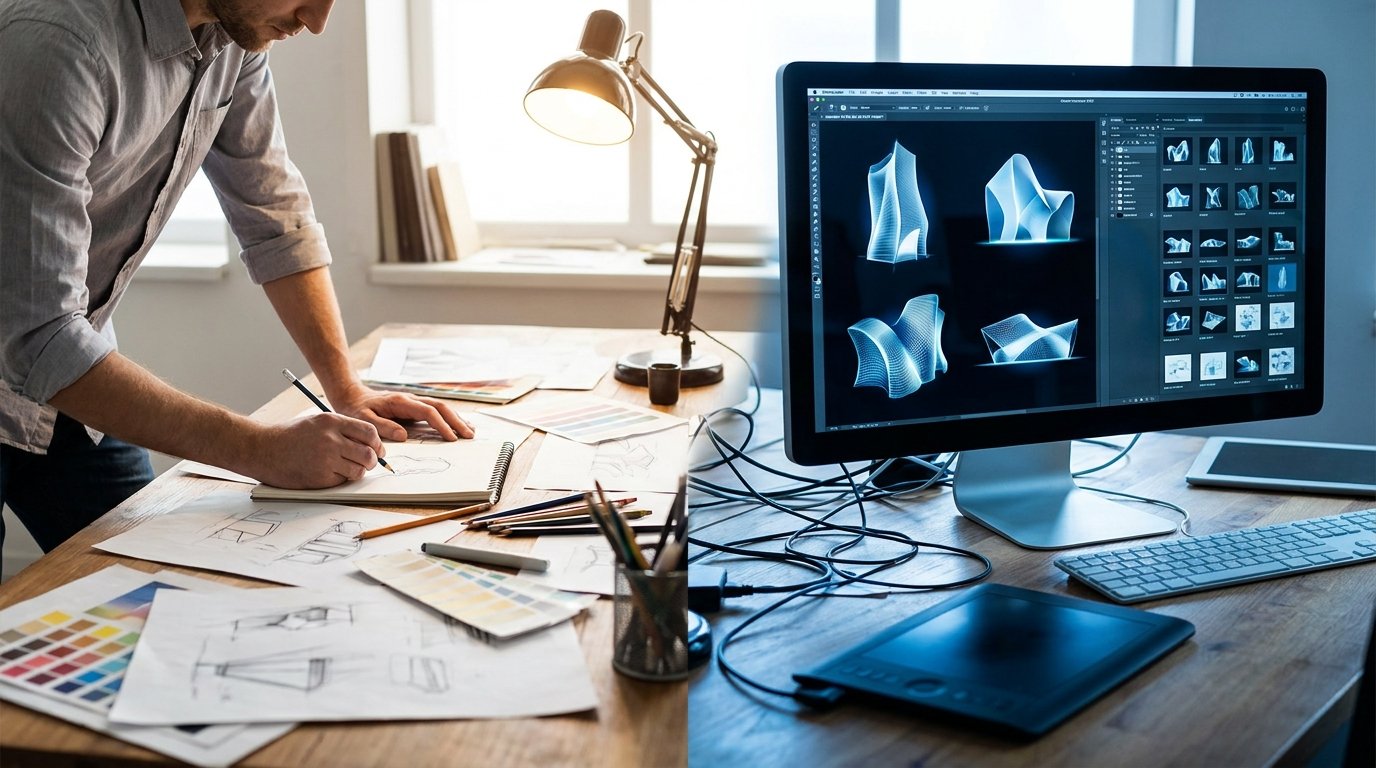
AI technology has been gaining traction in the graphic design industry due to its ability to handle repetitive tasks and generate designs quickly. Programs like Midjourney and Firefly enable designers to automate elements of their workflow, providing templates, colour schemes, and even complete design suggestions.

However, the impact of AI goes beyond mere automation. It offers predictive insights and real-time feedback, allowing designers to optimise their work in unprecedented ways. Yet, these advancements raise concerns about homogenisation, where AI-generated designs may lead to visual sameness, diluting the uniqueness that a human touch brings to creative work.

Legal and Copyright Challenges

One of the major concerns with AI in graphic design is the question of intellectual property. Since AI-generated designs lack a human creator, issues arise regarding ownership and copyright. This has significant implications for client contracts, as the legal frameworks surrounding AI-generated content are still evolving.

Professional designers must be aware of these risks and consider implementing AI Usage Policies that clearly define ownership and usage rights. Such policies not only protect designers but also provide clarity to clients, ensuring trust and compliance with emerging legal standards.

Expert Perspective

Lead Design Analyst

As an authority in graphic design, it’s evident that while AI offers remarkable tools, it is not a substitute for human creativity. Designers who embrace AI as a complementary tool rather than a replacement will thrive in this evolving landscape.

The Shift in Pricing Models

As AI tools streamline the design process, the traditional hourly billing model is becoming less relevant. Designers are increasingly transitioning to value-based pricing, which reflects the strategic input and creative direction they bring, rather than just the time spent on execution.

This shift acknowledges the value of human oversight in AI-assisted workflows, where the designer’s role evolves to focus on strategic planning, creative direction, and ensuring brand integrity. By leveraging AI for routine tasks, designers can devote more time to innovative and personalised design solutions, offering clients greater value.

Why Human Creativity Still Reigns Supreme

Despite AI’s capabilities, it struggles with tasks that require emotional intelligence and cultural nuance. Localised branding, sarcasm, and subtle cultural references are areas where AI falls short. These elements are crucial in high-end marketing, where understanding the target audience’s cultural context is key.

The ‘Human Outlier’ effect becomes a competitive advantage in this scenario. Designers who inject unique perspectives and innovative ideas into their work stand out in a field increasingly populated by AI-generated designs. Creativity and innovation are inherently human traits that AI has yet to replicate.

Hybrid Workflows: A Balanced Approach

Many agencies have begun adopting hybrid workflows, combining AI tools with human creativity. This approach allows designers to maintain brand integrity while benefiting from the efficiencies AI provides. By using AI to generate initial concepts or handle routine tasks, designers can focus on refining and personalising the final product.

Such workflows demonstrate that AI and human creativity are not mutually exclusive but rather complementary. By understanding AI’s limitations and strengths, designers can create more dynamic and engaging designs that resonate with audiences.

Frequently Asked Questions

AI struggles with tasks requiring emotional intelligence and cultural nuance, such as localised branding and understanding sarcasm.

AI encourages a shift from hourly billing to value-based pricing, focusing on strategic input and creative direction.

Legal issues include challenges with intellectual property rights and ownership of AI-generated content.

While AI can automate certain tasks, it cannot replace the unique creativity and cultural understanding of human designers.

Designers can adopt hybrid workflows, using AI for routine tasks while focusing on the strategic and creative aspects of design.