Key Takeaways
- AI is central to modernising industries through automation and data insights.
- Workforce dynamics are shifting, with new AI-related roles emerging.
- Healthcare is experiencing enhanced diagnostics and treatment planning.
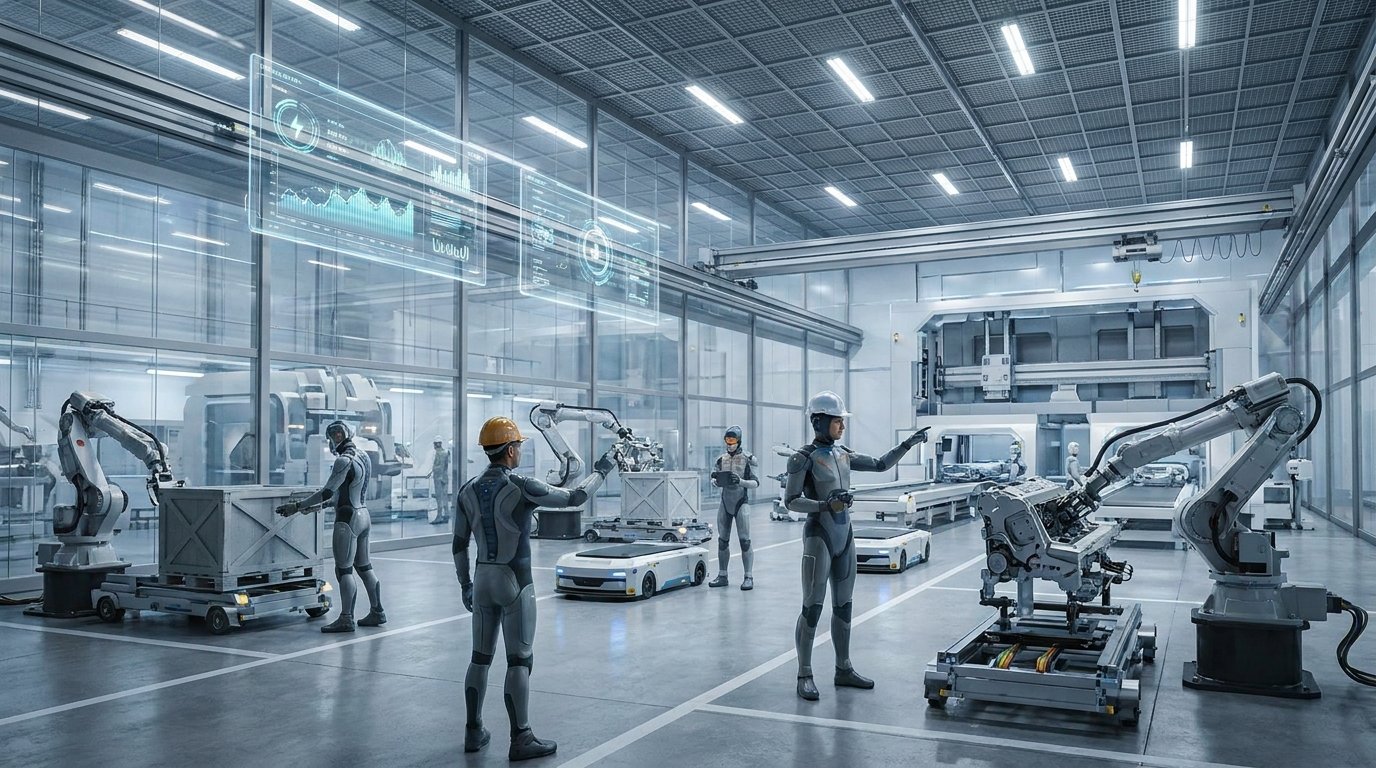
- Manufacturing benefits from AI’s predictive maintenance and supply chain optimisation.
Key Answer
AI is revolutionising modern industries by automating processes, improving efficiency, and enabling data-driven decision-making, thereby transforming business operations across sectors.
In recent years, the question of why AI is revolutionising modern industries has become increasingly prevalent. Artificial Intelligence (AI) is transforming sectors across the globe, offering unprecedented opportunities for efficiency, innovation, and growth. From manufacturing to healthcare, AI technologies are reshaping the way businesses operate, ensuring they remain competitive in an ever-evolving market.
The Core Benefits of AI in Industry
AI’s primary advantage lies in its ability to automate repetitive tasks, freeing up human resources for more complex activities. This automation leads to significant cost savings and efficiency improvements. For instance, in manufacturing, AI-driven robots can perform tasks with high precision and speed, reducing errors and waste.
Moreover, AI systems can analyse vast amounts of data faster than any human could, providing insights that drive strategic decisions. This data analysis capability is crucial in sectors like finance, where quick, informed decisions can make the difference between profit and loss.
| Benefit | Description | Industry Impact |
|---|---|---|
| Automation | Reduces manual labour and errors | Manufacturing, Retail |
| Data Analysis | Provides deep insights and forecasts | Finance, Marketing |
| Cost Savings | Lowers operational costs | All sectors |
| Efficiency | Increases speed and precision | Healthcare, Logistics |
Transforming the Workforce
The rise of AI doesn’t merely automate; it also transforms the workforce. It necessitates a shift in skills, with a growing demand for expertise in AI system management and data analysis. While some fear job losses, AI is more about job transformation than elimination. The World Economic Forum predicts that while 85 million jobs may be displaced by 2025, 97 million new roles could emerge as the workforce adapts to the new digital economy.
In healthcare, for instance, AI is taking over routine diagnostic tasks, allowing medical professionals to focus on patient care. This shift enhances the quality of healthcare services and improves patient outcomes.
Expert Perspective
Technology Consultant
In my experience as a technology consultant, the transformative impact of AI on industries is both profound and inevitable. Businesses must embrace AI to remain competitive, integrating it not just as a tool, but as a strategic partner in innovation.
AI in Healthcare: A Closer Look
In healthcare, AI technologies are revolutionising patient diagnosis, treatment planning, and personalised medicine. Machine learning algorithms can identify patterns in complex datasets, predicting patient outcomes with remarkable accuracy. This capability aids doctors in making more informed decisions, ultimately enhancing patient care quality.
AI’s role in diagnostics is also transformative. For example, AI systems can analyse medical imaging faster and often more accurately than traditional methods, detecting diseases at earlier stages. This early detection capability is critical in treating conditions like cancer, where early intervention can significantly affect survival rates.
| AI Application | Function | Benefit |
|---|---|---|
| Patient Diagnosis | Identifies patterns in data | Improved accuracy |
| Treatment Planning | Assists in decision-making | Enhanced care quality |
| Medical Imaging | Analyzes images efficiently | Early disease detection |
AI and the Future of Manufacturing
In the manufacturing sector, AI is enhancing production lines through predictive maintenance and smart supply chain management. AI algorithms can predict machinery failures before they occur, minimising downtime and saving costs. This predictive maintenance is essential for maintaining production efficiency and extending the lifespan of equipment.
Additionally, AI optimises supply chain operations by forecasting demand and managing inventory levels more accurately. These optimisations reduce waste, lower costs, and improve customer satisfaction by ensuring products are available when needed.
Addressing Ethical and Security Concerns
As AI becomes integral to industries, ethical considerations and security concerns must be addressed. Ensuring data privacy and developing fair, unbiased AI algorithms are paramount. The potential for AI to exacerbate existing biases is significant, necessitating vigilant oversight and inclusive development practices.
Security is another critical area. AI systems must be robust against cyber threats, which are becoming increasingly sophisticated. Industries must implement comprehensive security protocols to safeguard their AI technologies and the sensitive data they handle.
Frequently Asked Questions
AI improves efficiency by automating repetitive tasks, reducing errors, and processing large datasets quickly for better decision-making.
AI is transforming job markets by shifting skill demands towards AI management and data analysis, creating new roles while phasing out some traditional jobs.
AI ensures data privacy and security through robust encryption methods and stringent protocol development to protect against cyber threats.
AI is crucial in healthcare for improving diagnostic accuracy, personalising treatment plans, and detecting diseases early through advanced data analysis.
Ethical concerns include ensuring AI algorithms are fair and unbiased and managing data privacy responsibly to prevent misuse.