
Key Takeaways
- AI serves as the backbone of automation in modern industries.
- Data-driven decision making is significantly enhanced by AI.
- AI transforms healthcare by improving diagnostics and patient care.
- Customer experiences are revolutionised with AI-powered tools.
Key Answer
AI is revolutionising modern industries by enhancing efficiency, fostering innovation, and enabling data-driven decision-making. It transforms manufacturing, healthcare, and finance, improving operations and outcomes.
Artificial Intelligence (AI) is no longer just a concept of science fiction; it is a transformative force reshaping industries across the globe. From manufacturing floors to customer service operations, AI is driving efficiency, innovation, and growth. As industries strive to stay competitive in an ever-evolving market landscape, understanding why AI is revolutionising modern industries is crucial.
The Backbone of Automation
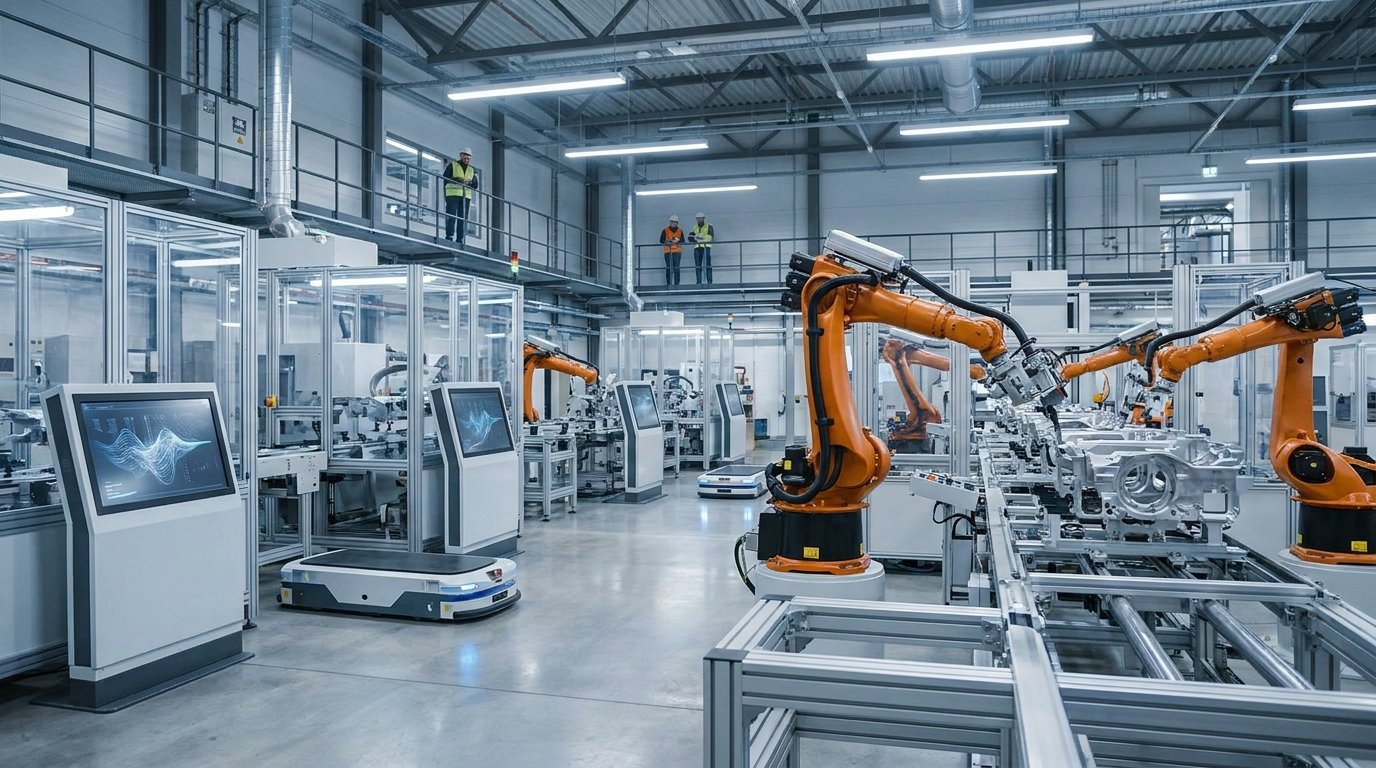
AI’s most significant impact has been in automation, where it serves as the backbone for increasingly sophisticated processes. In manufacturing, AI-powered robots work alongside humans, enhancing productivity and safety. They perform repetitive tasks with precision, leaving complex decision-making to human workers. This symbiosis not only boosts output but also reduces workplace accidents, showcasing why AI is indispensable in modern industry.
Data-Driven Decision Making
Industries are awash with data, and AI provides the tools to make sense of it all. By analysing vast datasets, AI helps businesses make informed decisions that would otherwise be impossible. In sectors like finance, AI algorithms predict market trends, enabling firms to make investment decisions with greater accuracy. Similarly, in retail, AI analyses consumer behaviour, driving personalised marketing strategies that enhance customer engagement.
Expert Perspective
AI Industry Specialist
AI’s integration into industries marks a revolutionary shift, particularly in sectors like healthcare and supply chain management where precision and efficiency are critical. The potential for AI to transform business operations is vast, and industries that adapt quickly stand to gain substantial competitive advantages.
AI in Healthcare: A Paradigm Shift
Healthcare is witnessing a paradigm shift with AI at its core. AI aids in diagnostics by analysing medical images with a level of accuracy that matches or surpasses human doctors. Machine learning algorithms assist in predicting patient outcomes, allowing for proactive intervention. This capability is transforming patient care, from early diagnosis to personalised treatment plans.
Transforming Customer Experiences
AI is also revolutionising how businesses interact with their customers. Through chatbots and virtual assistants, AI provides 24/7 customer service, handling inquiries, and resolving issues with unprecedented efficiency. These tools learn from each interaction, improving their responses over time, which enhances customer satisfaction and loyalty. This transformation in customer service is a testament to AI’s role in enhancing business operations.
Enhancing Supply Chain Management
The complexity of global supply chains necessitates advanced solutions that AI readily provides. AI optimises logistics by predicting demand, managing inventory, and streamlining delivery processes. This ensures that companies can respond swiftly to market demands and minimise operational costs. By enhancing transparency and accountability, AI is an invaluable asset in supply chain management.
AI and Environmental Sustainability
AI is not only about boosting business outcomes but also about promoting sustainability. By optimising energy use in industrial operations, AI reduces carbon footprints. Smart grids and predictive maintenance of machinery contribute to a more sustainable industrial environment. These applications demonstrate AI’s role in aligning business goals with environmental responsibility.
Frequently Asked Questions
AI improves workplace safety by automating dangerous tasks, monitoring work environments, and predicting potential hazards, thereby reducing accidents.
In financial services, AI helps in fraud detection, market analysis, and personalized banking experiences, enhancing security and customer satisfaction.
Yes, AI contributes by optimizing resource usage, enhancing energy efficiency, and supporting predictive maintenance, which collectively reduce environmental impact.
AI enhances customer service through chatbots and virtual assistants that provide efficient, 24/7 support, learning from interactions to improve over time.
Challenges include high implementation costs, data privacy concerns, and the need for specialized talent to manage AI systems.